

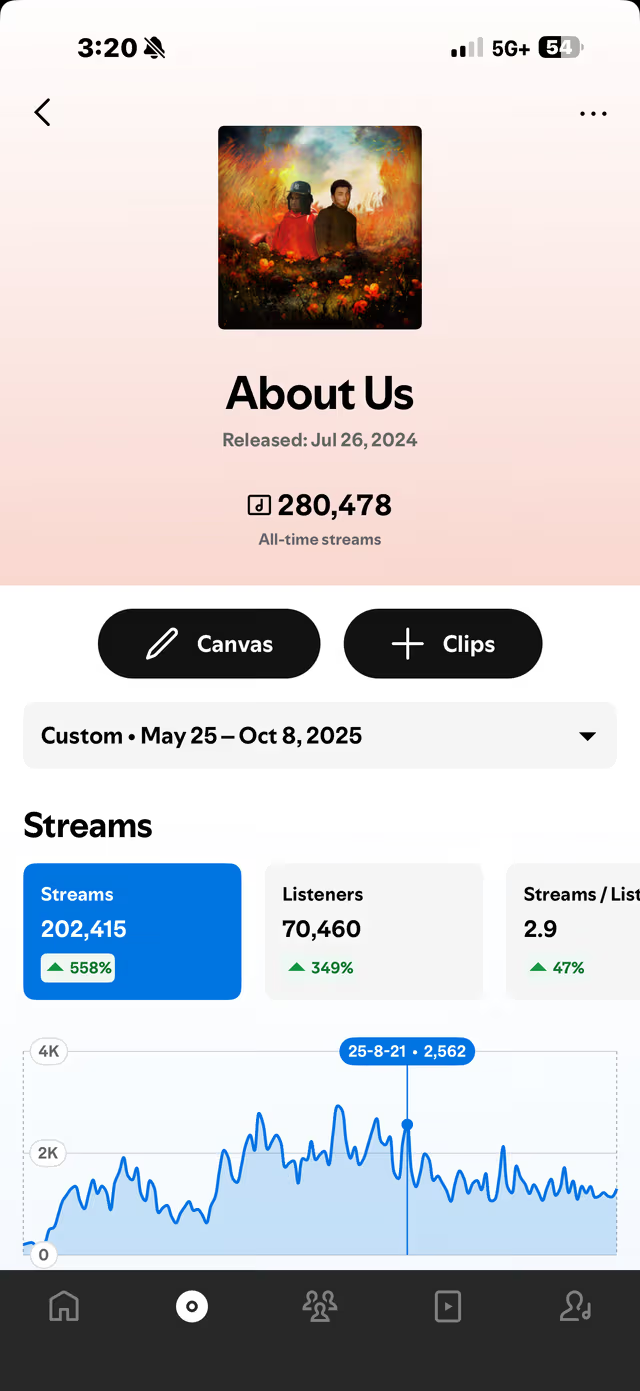
How to promote your music with Facebook and Instagram ads in 2026. This comprehensive guide covers everything from setting up your ads to scaling for maximum streams.
Why Meta Ads Work for Musicians
With over 3 billion users across Facebook and Instagram, Meta advertising offers unprecedented reach for musicians. Unlike organic methods, paid ads let you target exactly the audience most likely to enjoy your music. Whether you are an indie artist or signed to a label, understanding Meta advertising is essential for growth in 2026.
The average cost per result for music promotion ranges from $0.50 to $3.00 depending on your targeting and creative quality. When done correctly, a well-optimized ad campaign can generate hundreds of streams per dollar spent.
Setting Up Your Meta Business Manager
Before creating any ads, you need to set up your Business Manager account. This free tool from Meta is where you will manage all your advertising activities. Visit business.facebook.com and create an account using your personal Facebook profile. Add your business details including name, address, and contact information.
Next, you will need to set up an Ad Account. This is where your advertising spend flows through. You can create one Ad Account for free, though you may eventually want a verified business account to access higher spending limits and additional features.
The most critical component is the Facebook Pixel. This small piece of code tracks everyone who visits your website, allowing you to build audiences and measure conversion. Install the Pixel on your website using either the manual code insertion or through partners like WordPress, Shopify, or Wix. Verify the Pixel is working using the Meta Pixel Helper Chrome extension.
Understanding Campaign Objectives
Meta offers dozens of campaign objectives, but for music promotion, you should focus on three primary categories:
Awareness: Use Reach or Video Views objectives when you want to build brand awareness. These campaigns are optimized to show your content to as many people as possible within your budget.
Consideration: Traffic and Engagement objectives work well for driving people to your website, Spotify profile, or social media. These campaigns encourage interaction with your content.
Conversion: The most valuable for musicians is the Conversions objective. This targets people likely to stream your music, sign up for your newsletter, or purchase merchandise.
For beginners, start with the Traffic objective to drive people to your Spotify profile or website. Once you have Pixel data (at least 100 conversions), switch to Conversions for better results.
Building Your Target Audiences
Audience targeting is where your campaign success is determined. Meta offers three types of audiences:
Core Audiences: These are audiences you build based on demographics, interests, and behaviors. For music promotion, target people who like artists similar to you. For example, if you make hip-hop, target fans of Kendrick Lamar, J. Cole, or Drake. Include interests like Spotify, music streaming, and concert venues.
Custom Audiences: These are your most valuable audiences. Create Custom Audiences from:
- Website visitors (via Pixel)
- People who engaged with your Instagram or Facebook content
- Your email list (upload customer files)
- People who watched your videos
Lookalike Audiences: Once you have at least 100 people in a Custom Audience, create Lookalikes. Meta will find people with similar characteristics who are likely to be interested in your music. Start with 1% Lookalikes for the most similar audiences, then expand to 2-3% as you scale.
Creating Compelling Ad Creative
Your ad creative determines whether people stop scrolling or keep going. For music promotion, these formats work best:
Video Ads: Short 15-30 second videos showing you in the studio, performing, or behind-the-scenes content perform exceptionally well. Add trending audio to increase reach. Include captions since most people watch without sound. End with a clear call-to-action directing them to stream on Spotify.
Carousel Ads: Feature multiple tracks, merchandise items, or tour dates in a single ad. Each carousel card can link to different content, letting you showcase your entire catalog.
Collection Ads: These immersive ads let users browse your music, videos, or merchandise without leaving Facebook or Instagram.
When writing ad copy, speak directly to your ideal listener. Use phrases like “For fans of [artist] who love authentic hip-hop” or “If you miss real music with meaning, listen to this.” Include social proof like “Over 100K streams” or “Featured on Spotify playlists.”
Budgeting and Bidding Strategy
Start with a daily budget of $5-10 per ad set. This allows you to test multiple audiences and creatives without overspending. The key is testing: create 3-4 ad sets with different audiences, then let each run for 3-5 days before evaluating results.
For bidding, use the Lowest Cost strategy when starting out. This lets Meta optimize for the lowest cost per result. As you scale and need more predictable results, switch to Target Cost.
Scale winning campaigns by increasing budget by 20-30% every 3-5 days. If a campaign stops delivering or costs increase significantly, it is likely experiencing ad fatigue. Refresh the creative or target new audiences.
Retargeting Strategies
Retargeting is where you convert interested prospects into streams or fans. Create Custom Audiences for:
- People who visited your website in the last 30 days
- People who watched 25% or more of your video ads
- People who engaged with your Instagram posts
- People who added items to cart but did not purchase
For these warm audiences, use more direct CTAs like “Stream now on Spotify” or “Listen now before it is gone.” Offer exclusive content or limited-time incentives to drive conversions.
Tracking and Optimization
Set up the Meta Conversions API to track more accurately, especially as iOS 14+ changes how Pixel tracking works. Connect your Instagram account to track cross-platform engagement. Review your Ads Manager dashboard daily during testing, then weekly once campaigns stabilize.
Key metrics to watch:
- Cost per Result: How much you pay for each stream or conversion
- Frequency: How many times people see your ad. Stop at 3-4 to avoid fatigue
- Click-Through Rate: Aim for above 1%
- Video Watch Time: If people are watching your full video, your creative is working
Common Mistakes to Avoid
Many musicians fail with Meta ads because they make these critical errors:
Testing too many variables at once: Change only one element at a time to know what works.
Not allowing enough time: Give each test at least 3-5 days before judging results.
Using low-quality creative: Professional-looking videos with good lighting and audio perform significantly better.
Ignoring the Pixel: Without proper tracking, you cannot optimize or retarget effectively.
Setting unrealistic expectations: Build your audience gradually. Start with modest goals and scale as you learn what works.
Conclusion
Meta advertising is one of the most powerful tools for music promotion in 2026. The key is starting simple, testing continuously, and optimizing based on data. Begin with small budgets, focus on building your Pixel data, and gradually scale winning campaigns. With patience and persistence, Meta ads can help you reach millions of potential fans and grow your streaming numbers significantly.
Ready to promote your music? Get professional help with your Meta ad campaigns at Advertise Your Music